
International Conference on Nomadic Alternative Education Approaches in Africa
Empowering Nomadic and Alternative Education for Inclusive and Sustainable Development in Africa
Theme
Strengthening Inclusive and Flexible Education Pathways for Nomadic Pastoralists and Marginalized Learners in Africa
Introduction
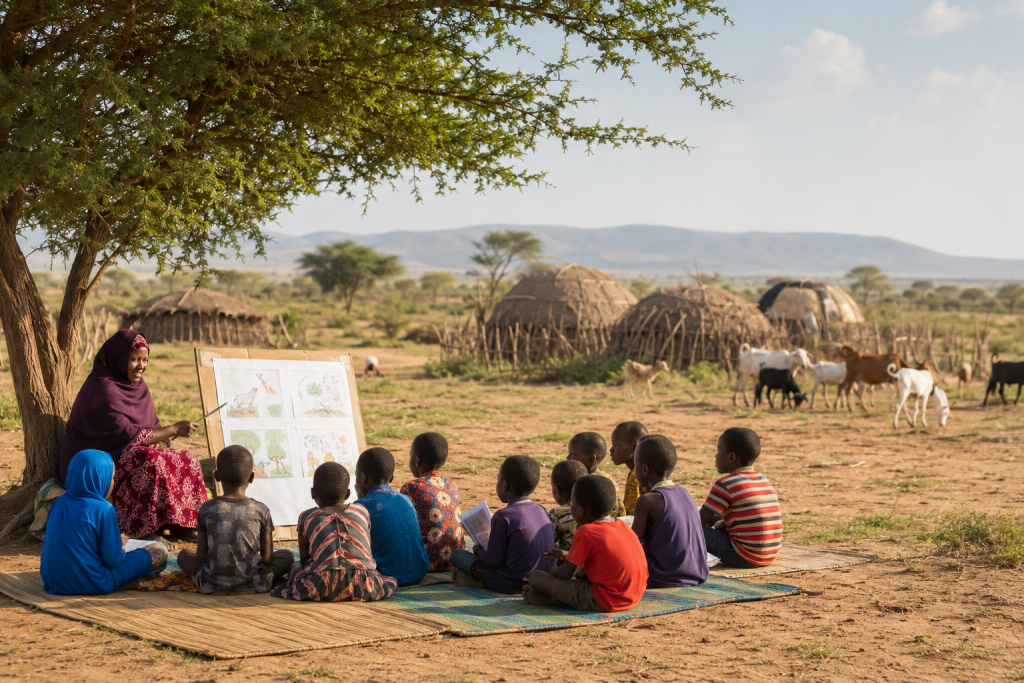
Nomadic and alternative education plays a critical role in ensuring that every learner, regardless of location, lifestyle, or circumstance, has access to quality, relevant, and inclusive learning opportunities. This international conference brings together stakeholders to share knowledge, evidence, innovations, and best practices that can transform education systems and improve outcomes for nomadic, pastoralist, and hard-to-reach populations across Africa and beyond.
Capital University of Somalia in collaboration with Maryam Abacha American University of Nigeria, the Catholic University of East Africa, Kenya, and the University of Namibia, invites researchers, educators, policymakers, development practitioners, civil society actors, and community stakeholders to submit abstracts and papers for the International Conference on Nomadic and Alternative Education Approaches in Africa.
The conference seeks to provide a platform for policy dialogue, knowledge sharing, research dissemination, and collaborative action expanding equitable access to quality education for nomadic, pastoralist, migrant, refugee, displaced, remote, and other marginalized learners across Africa.
Conference Sub-Themes
Submission Guidelines
- Authors should prepare and submit original abstracts in accordance with the conference submission guidelines.
- Abstracts should align with one or more of the conference sub-themes and demonstrate originality, relevance, and scholarly quality.
Individual/Group Guidelines for Alternative Education Project Demonstration
- A group will comprise of 2–5 members.
- Projects will be reviewed by an expert panel.
- Innovative solutions aligned with conference themes.
- Prototypes addressing real-world educational challenges.
Participans
Who Should Apply?
- Researchers and academics in universities and colleges
- Education policymakers and planners
- Government ministries and agencies
- Development partners and international organizations
- Professional Organizations
- Civil society and non-governmental organizations
- Teachers, school leaders, and education administrators
- Community leaders and representatives of nomadic communities
- Students and early-career researchers
- Practitioners working with refugees, migrants, displaced persons, and marginalized learners
- Research institutions
Important Dates
| Activity Name | Dates |
|---|---|
| Abstract Submission Deadline | 7th August 2026 |
| Notification of Acceptance | 14th August 2026 |
| Full Paper Submission Deadline | 11th Sept. 2026 |
| Registration Deadline | 11th Sept. 2026 |
| Conference Dates | 3rd – 6th November 2026 |